Know your cash before it gets tight
See when cash will arrive, when it will leave, and how much room the business has.


I help CEOs and boards answer one question: What happens next? We connect pipeline, cash, margins, indirect rates, debt, and risk before the business commits.
Where I help
A sale changes cash and debt. A new contract changes margin and staffing. A compliance cost changes which work you can win. I connect the pieces before you decide.
See when cash will arrive, when it will leave, and how much room the business has.
Connect pipeline, start dates, project margins, indirect costs, profit, and cash in one view.
Test indirect rates, cost recovery, rate ceilings, and compliance costs against the contracts you have.
Model a sale, investment, new hire, or financing choice before the business is locked in.
Services
Some businesses need a CFO at the table. Others need one clear answer before they commit. We can start with the work in front of you.
01
We build the cash plan, forecast, profit view, and reporting rhythm leaders need to run the business and work with boards and lenders.
02
Bring a proposal, contract, investment, sale, financing choice, or growth plan. We connect the numbers and show what could happen next.
03
We turn scattered financial and operating data into clear models, Power BI reports, and more reliable workflows.
Three true stories
Company names are withheld. The decisions, numbers, and outcomes are real.
$4M sale
A government contractor needed cash to support its growing USAID portfolio. It found a buyer for a smaller business unit, and about $4 million would remain after closing. On the surface, the sale solved the immediate working capital problem.
But the unit generated about $2 million in recurring annual EBITDA. My model showed that the cash would be used within six months, the senior-debt-to-EBITDA ratio would rise above the bank's 2.5 limit, and the company would not have enough time to replace the lost earnings. Leadership walked away from the sale. One year later, the USAID portfolio disappeared, and the business they had almost sold became the only surviving part of the company's U.S. operations. The model did not predict that event. It showed that the sale would leave the company with less diversification and almost no room to absorb a major change.
Sale decision
$5M pipeline
The company had lost about $400,000 and was heading toward another loss. The owner believed the answer was more work. If the full $5 million pipeline became revenue at a 20% margin, it could produce up to $1 million in gross profit before additional indirect costs.
But the new work required more indirect staff and overhead, which would use much of the margin. I connected the pipeline, project start dates, margins, indirect costs, profit, and cash in one model. It showed that the company needed about $2.5 million in additional revenue at a margin of at least 20% while using its existing indirect capacity to break even. The owner now had a clear target to manage throughout the year instead of waiting for another surprise at year-end.
Break-even plan
$3M investment plan
A government contractor was considering a $3 million technology investment. Leadership planned to capitalize the investment and test how the related annual depreciation, amortization, and operating costs would affect the company's G&A rate. On paper, an increase of about one percentage point made the plan look reasonable.
When I tested the higher rate across the full contract portfolio, a hidden problem appeared. Several of the company's largest contracts had G&A rate ceilings. Contract terms and indirect-rate ceilings meant that the portfolio would not recover the full increase. Most of the unrecovered cost would reduce EBITDA. Leadership did not cancel the investment. It changed the size and timing of the plan, kept the G&A rate within the level the current contract portfolio could recover, and created a way to expand the investment as the contract mix changed.
Cost recovery
About Anush
I am a fractional CFO, CPA, and MBA. I have led finance for government contractors and project-based organizations from inside the business, including as a Vice President of Finance and Deputy CFO.
I have worked through cash shortages, lender questions, contract rate limits, audits, growth plans, and deals that looked better on paper than they did in the full model. My job is to make the numbers clear enough for a CEO, board, or lender to act.
Meet the team
Anush leads the CFO work and the client relationship. Estefany builds the models, reporting, and data workflows that make the advice easier to use.
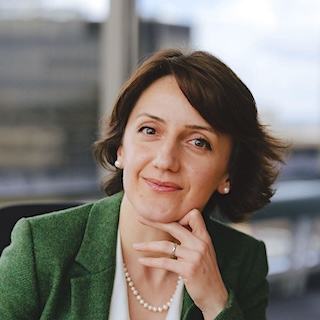
Principal Advisor & Fractional CFO
Anush works with CEOs and boards on cash, profit, contracts, financing, and major business decisions.

Financial Engineer & Data Analyst
Estefany connects financial and operating data through Power BI, Power Query, and SQL. She builds clear reporting and more reliable processes so leaders can see what is happening sooner.
How we work together
01
Tell me what you need to decide, what worries you, and what could go wrong.
02
We connect the contracts, pipeline, margins, costs, cash, debt, timing, and risk.
03
You leave with a clear target, an owner, and the next step. Then we track what changes.
Have a decision that does not fit in one spreadsheet?
Book a private conversation. Bring the question and the numbers you have. We will start there.